16 billion password leak: Mostly recycled data
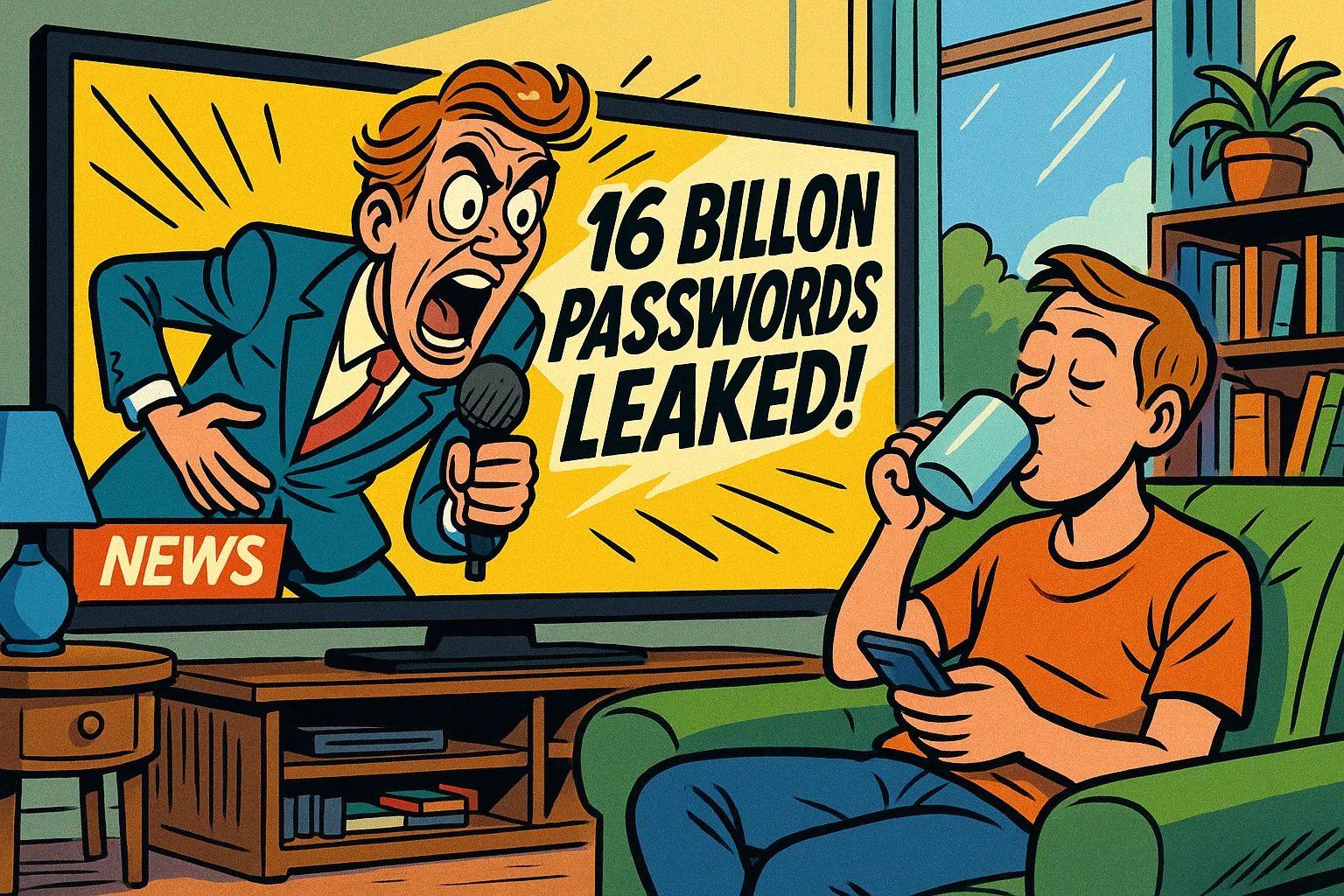
- The '16 billion password leak' is largely a compilation of previously breached data, not a new security incident
- Experts estimate the actual number of unique, valid credentials is significantly lower due to duplicates and outdated information
- The real security risk comes from password reuse and infostealer malware targeting individual devices
Lead
June 2025’s “16 billion passwords” story ricocheted across newsfeeds faster than you could type changepassword123. Apple, Google, Facebook, and other household names appeared in every headline, sparking visions of a digital apocalypse. Yet scratch the surface and a less sensational narrative emerges: the leak is largely an overstuffed roll-up of data dumps that have circulated on the dark web for years. Below is a critical look at the numbers, the context, and the practical lessons you should actually act on.
The headline hype
Cybernews researchers reported finding 30 unsecured databases holding a combined 16 billion credential pairs, usernames, passwords, cookies, and assorted tokens, exposed via misconfigured Elasticsearch clusters and object storage buckets.(cybernews.com)
Outlets from Forbes to Tom’s Guide framed the discovery as an unprecedented fresh breach affecting the planet’s biggest platforms.(forbes.com, tomsguide.com) Many readers assumed those companies had been hacked en masse. They had not.
Key context most coverage skipped
- No single target fell. The data is a patchwork of logs stolen by infostealer malware, prior breach compilations, and credential-stuffing lists, not a breach of Apple, Google, or Facebook servers.(bleepingcomputer.com)
- Public exposure was brief. Researchers caught the databases during a short visibility window; threat actors had not necessarily harvested them at scale.(cybernews.com)
- Scope claims vary. Even Cybernews concedes records “might be overlapping,” acknowledging unknown duplication.(cybernews.com)
Where the 16 billion figure came from
The tally adds raw line counts from 30 databases, some topping 3.5 billion rows, others a few million. Values include:
- Infostealer logs (browser-saved passwords, session cookies).
- Credential-stuffing dictionaries (email:password combos tested on popular sites).
- Legacy mega-breaches such as RockYou2024 and “Mother of All Breaches” slices.(cybernews.com)
Because researchers lacked time and legal clearance to fully download or deduplicate every file, they summed advertised row counts instead of unique credential pairs. That shortcut inflates scale.
Most of the data is recycled
Security journalist Lawrence Abrams calls the incident “not a new data breach at all” but a remix of long-leaked credentials.(bleepingcomputer.com) Hudson Rock’s deeper sample analysis backs him up, noting recycled, outdated, even fabricated pairs designed to pad file size.(infostealers.com)
Evidence of recycling
- Age markers. Screenshots show timestamps from years past, suggesting ingestion dates rather than theft dates.(bleepingcomputer.com)
- Unrealistic infection math. Reaching 16 billion unique passwords would require roughly 320 million malware-infected machines, an order of magnitude above known global infostealer infections.(infostealers.com)
- Overlap with well-known dumps. Exact hashes from RockYou-style compilations appear in sample rows.(infostealers.com)
Duplicates distort the scale
Scripps News highlighted that “there are most certainly duplicates … it’s impossible to tell how many people or accounts were actually exposed.”(scrippsnews.com)
Why duplicates matter:
| Myth | Reality |
|---|---|
| 16 billion people affected | Many accounts repeat across platforms; one user might contribute dozens of credential pairs. |
| Fresh keys for hackers | A recycled password already forced a reset or expired is worthless. |
| Breach equals password leak | Some rows contain only usernames, cookies, or tokens without plain-text passwords. |
| No data available |
Conservative industry estimates suggest unique, still-valid password count is far closer to the low hundreds of millions, bad, but not apocalypse-level.
Infostealers vs fresh breaches
The real through-line is infostealer malware. When a user unwittingly installs such malware, it harvests locally stored passwords and browser cookies, then funnels them into criminal logs. Those logs are later bundled, sold, and eventually dumped for free clout on Telegram or hacker forums. The June 2025 cache is simply the latest, and largest, instance of that recycling cycle.
Infostealers matter because they can yield session cookies that bypass two-factor authentication, especially if sites fail to invalidate tokens after password resets.(cybernews.com) Yet infostealer risk is constant and well-known, not unique to this headline.
Comparing media coverage to the real risk
| Coverage angle | Why it overstates the threat | Nuanced view |
|---|---|---|
| “Largest breach ever” | Counts every row, ignores reuse & age. | Size alone says little about exploitability. |
| “Targets Apple, Google, Facebook” | Implies server hacks. | Credentials stolen from end-user devices; companies were not breached. |
| “Act now or lose your account” | Generates clicks via fear. | Good hygiene is wise, but mass panic benefits scammers more than users. |
| No data available |
Forbes warned readers to “change yours now,” framing passkeys as the only salvation.(forbes.com) Meanwhile Axios quietly updated its headline to clarify the dump “represents a compilation of past known breaches,” walking back initial alarm.(axios.com)
What actually matters for users and organizations
- Credential reuse remains enemy #1. If you still recycle a favorite password, any old breach, even from 2013, puts multiple accounts at risk.
- Infostealer infections fly under radar. Antivirus plus application allow-listing and browser hardening cut exposure.
- Session hijacking beats brute force. Attackers increasingly leverage cookies and tokens, so clearing browser data and enabling device-based MFA is vital.
- Automated phishing follows headline cycles. Scammers weaponize breach news to send fake “update your password” emails. Awareness is your first line of defense.
Actionable steps that still make sense
- Use a password manager to generate unique, 20-character passwords for every service.
- Enable multi-factor authentication (authenticator app or hardware key) on all critical accounts.
- Audit saved browser passwords and disable auto-fill for sensitive sites.
- Clear session cookies after changing critical passwords.
- Scan devices with reputable anti-malware tools if you suspect infestation.
- Monitor breach notification services like Have I Been Pwned or your password manager’s watchdog.
- Educate staff about infostealer-baiting phishing lures masquerading as breach follow-ups.
Bottom line
The “16 billion passwords” splash makes for sensational copy, but it largely repackages older, already traded credentials in a new container. Unique, exploitable records almost certainly fall far short of the headline figure, and no Silicon Valley giant suffered a direct system compromise. That said, complacency is not an option. Credential reuse, weak passwords, and unpatched infostealer infections remain evergreen threats that do lead to account takeovers and ransomware every day.
In short, treat the breach headlines as a timely reminder, not as a cause for panic. Rotate stale passwords, embrace two-factor authentication, and keep your machines clean. Do that, and recycled credential dumps, whether 16 billion or 160 billion, lose most of their sting.