Cybersecurity threats 2025: Essential protection guide
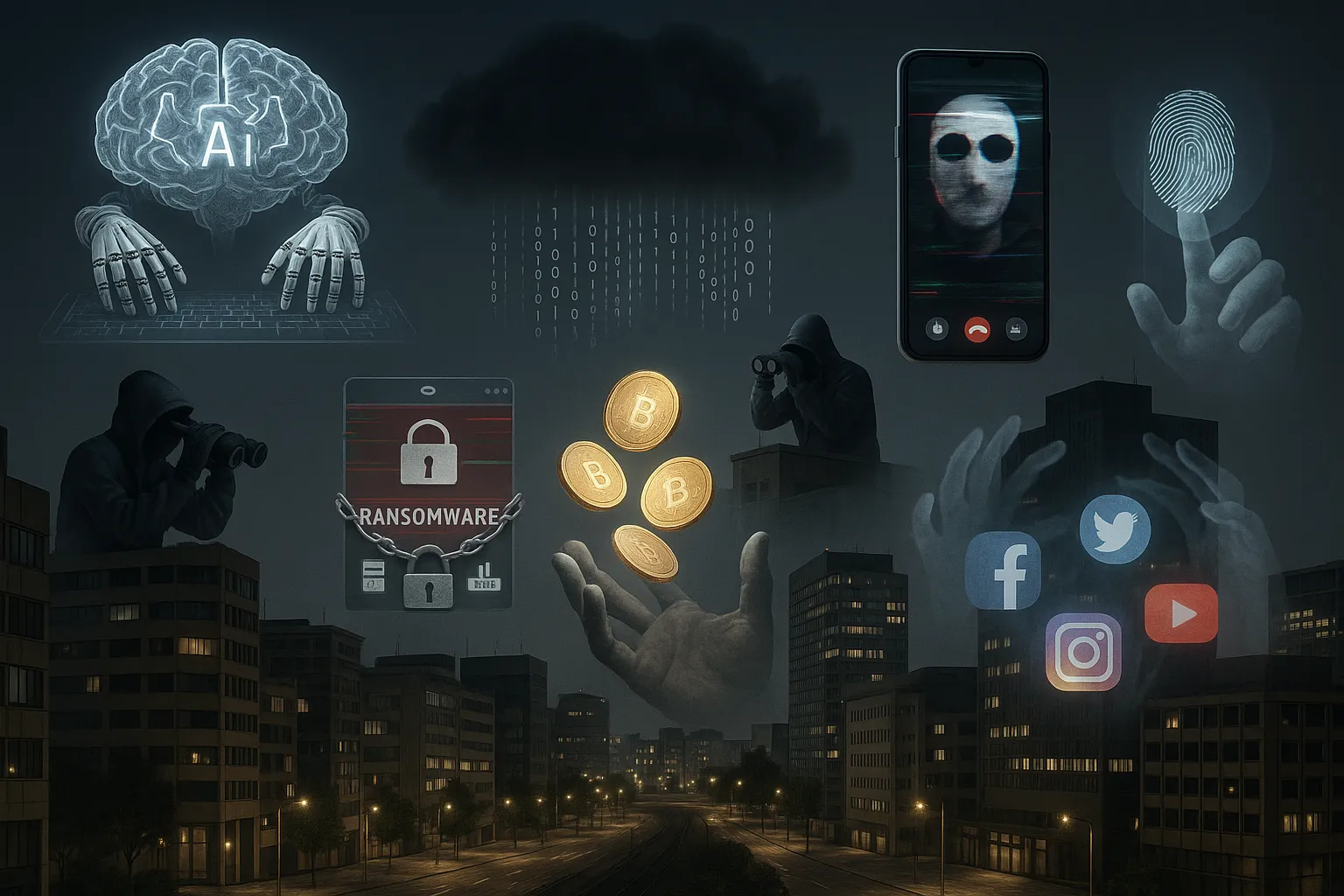
- AI-powered threats are personalized, automated, and rapidly evolving.
- Deepfake scams and quantum computing pose immediate and future privacy risks.
- Basic cyber hygiene combined with proactive measures dramatically reduces risks.
AI-driven cyber attacks
Imagine waking up to an inbox full of urgent emails, each appearing perfectly legitimate and personalized, but crafted entirely by artificial intelligence. In 2025, this isn’t fiction but reality.
AI-driven cyber threats are widespread, with over 85% of companies now reporting incidents involving AI-powered scams. Criminals leverage AI to automate phishing, making attacks more convincing and harder to detect.
Protect yourself:
- Activate multi-factor authentication on all accounts.
- Use password managers for unique passwords.
- Always double-check unexpected messages by contacting senders directly.
Deepfake scams
Picture getting a convincing video call from your boss requesting urgent wire transfers, only to later discover it was a deepfake. Deepfakes are becoming prevalent, with millions in losses already reported in 2025.
These synthetic videos and audio clips, built using AI, convincingly impersonate real people. Scammers exploit deepfakes for fraudulent schemes, crypto scams, and identity theft.
Stay safe:
- Verify unexpected requests through alternate trusted channels.
- Limit personal data shared publicly to reduce cloning risks.
- Employ facial verification methods in sensitive transactions.
Quantum computing risks
Consider your personal data secured behind encryption suddenly accessible due to quantum computing breakthroughs. Quantum computers threaten traditional encryption methods, potentially exposing data encrypted years ago.
Quantum decryption, although several years away from practicality, is already prompting “harvest now, decrypt later” schemes, posing a serious long-term privacy risk.
Act now:
- Transition to quantum-resistant encryption standards.
- Conduct audits of your encrypted data systems.
- Ensure encryption agility to adapt quickly to new standards.
IoT vulnerabilities
Think your smart fridge or thermostat is harmless? Unfortunately, IoT devices remain notoriously insecure and easily exploited by hackers in 2025, making them major entry points for broader cyber attacks.
Over half of IoT devices currently in use have critical vulnerabilities, often due to outdated firmware or weak security configurations.
Practical tips:
- Separate IoT devices from your main network.
- Update device firmware regularly.
- Immediately change default usernames and passwords.
Cyber espionage & privacy
Imagine your private business or personal data quietly stolen without your knowledge. Cyber espionage, involving nation-states and sophisticated actors, continues to escalate in 2025, targeting sensitive information.
Stolen data can fuel misinformation, economic sabotage, or be sold on black markets. These breaches remain largely invisible until damage occurs.
Prevent espionage:
- Implement zero-trust access principles.
- Encrypt all sensitive data consistently.
- Regularly monitor network activity for anomalies.
Ransomware evolution
Envision turning on your computer and discovering your files encrypted, accompanied by threats to release your data publicly if a ransom isn’t paid. Ransomware attacks now frequently include double-extortion tactics, significantly raising stakes.
Attacks targeting smaller businesses have surged dramatically, and attackers increasingly leverage sophisticated ransom-as-a-service models.
Mitigate risks:
- Maintain regular, secure backups separated from your main network.
- Keep systems patched and monitor for unusual activity.
- Educate your team about ransomware threats and responses.
Cryptocurrency scams
Picture getting a message promising a sure-fire crypto investment opportunity that leaves your wallet empty. Cryptocurrency scams have surged in 2025, fueled by AI-driven messaging and persuasive social engineering.
Romance and investment scams are particularly devastating, preying on trust and emotional vulnerability to defraud victims of substantial sums.
Defend your crypto:
- Never trust unsolicited investment offers.
- Thoroughly research crypto projects and verify legitimacy.
- Use hardware wallets and perform test transactions.
Social engineering
Imagine a trusted friend’s urgent message requesting immediate financial help, but it’s an AI-generated scam. Social engineering remains one of the simplest yet most effective cyber threats, preying on trust, urgency, and human error.
AI now enhances these threats by creating hyper-realistic interactions, exploiting emotional manipulation.
Stay vigilant:
- Verify any unusual or urgent requests independently.
- Conduct regular training to recognize social engineering attempts.
- Maintain healthy skepticism of unsolicited communications.
Cloud security risks
Think your data stored in the cloud is secure by default? Misconfigurations and excessive access privileges continue to plague cloud environments, creating easy avenues for breaches.
Cloud misconfigurations are behind most unintentional data exposures, making careful management of cloud settings crucial.
Secure your cloud:
- Adopt least-privilege access principles.
- Regularly audit cloud configurations and security.
- Employ cloud-specific security monitoring tools.
Biometric data threats
Consider the risk if your fingerprints or facial data are compromised, unlike passwords, you can’t reset biometrics. Biometric data breaches are increasingly concerning, given the irreversible nature of biometric information.
Once compromised, biometric data can be exploited repeatedly, posing a persistent threat.
Safeguard biometrics:
- Use biometric systems that incorporate robust liveness detection.
- Store biometric data securely and separately from other databases.
- Always use biometrics as part of multi-factor authentication.
Final thoughts: digital self-defense in 2025
Cybersecurity threats in 2025 demand proactive, informed responses. From AI-driven attacks to quantum computing risks, personal awareness and robust security practices form your best defense. Start now, stay informed, and continuously adapt your strategies to protect your digital life.