Thermal brick batteries: Factory heat alternative to lithium
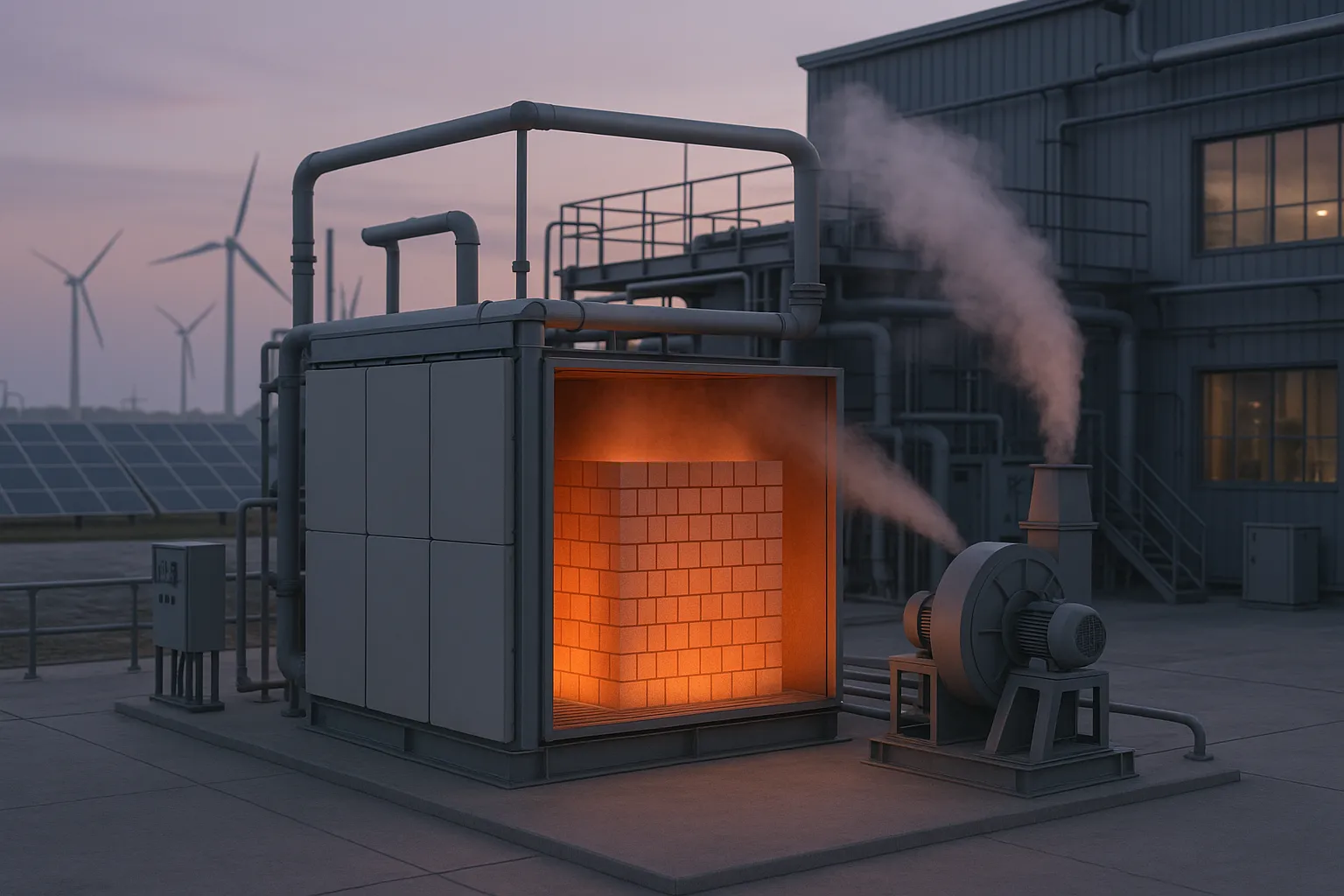
- Cheaper heat: €85 – €210/kWh bricks beat lithium‑ion
- 40-year lifespan means no costly battery swaps
- Cuts industrial heat costs versus hydrogen and electric boilers
The silent tech turning cheap green electricity into round‑the‑clock industrial heat
Cement kilns, steel furnaces, food dryers (almost every factory) live on high‑temperature heat, and that heat mostly comes from burning fossil fuels. Industrial process heat adds more carbon to the air than every passenger car on Earth. Electric motors were easy to green, yet boilers and kilns stayed stubborn.
Enter the thermal battery, a giant “heat sponge” made of special bricks or salts. It soaks up cheap renewable power whenever the grid is flush, then squeezes that heat back out exactly when the production line calls for it. Early units are already running 24/7 in cement, spirits, and chemical plants, cutting fuel bills without the fire risk, supply‑chain drama, or recycling headaches tied to lithium‑ion batteries.
Why factories need new storage
Factories that pledge net‑zero soon learn a hard truth: motors and lights are small fry, but the boilers that drive 70 % of their energy demand still depend on coal or gas. Renewable electricity is variable, and conventional batteries were designed to return electricity, not steam. That means extra heaters, extra wiring, and oversized packs that make the economics wobble.
Thermal batteries dodge that problem by storing energy directly as heat. They skip the electricity‑to‑steam detour and work with rugged, abundant materials like brick and steel. The result: cheaper upfront costs and higher “round‑trip” efficiency when the goal is heat, not electrons.
How a heat battery works (in plain English)
- Charge: Big electric coils warm stacks of engineered brick (or molten salt) until they glow red‑hot.
- Store: The bricks sit inside an insulated box, holding that heat for hours (or even days) with minimal loss.
- Discharge: When the plant needs steam or hot air, a simple fan blows through the box and comes out scorching, ready to feed the production line.
That is it. No exotic chemicals, no moving parts beyond a fan, and nothing to wear out. Because the bricks never change phase, they can repeat the cycle thousands of times without fading.
A quick note on thermochemical versions
Some labs go a step further, using salts that absorb or release heat through a reversible chemical reaction. Think of it as a rechargeable “heat crystal.” These prototypes can store two to three times more energy in the same footprint (handy where space is tight) but they are still pre‑commercial. Brick‑based designs are what you can buy today.
Cost check: heat batteries vs lithium‑ion
| Metric | Heat battery (brick) | Lithium‑ion pack |
|---|---|---|
| Installed cost (2025) | €85 – €210 per kWh | €180 – €300 per kWh |
| Cycle life | Unlimited (40+ years) | ~7 200 cycles (~10 years) |
| Useful output | 95 % heat | 85–90 % electricity + heater losses |
| Raw materials | Sand, clay, steel | Lithium, nickel, cobalt |
| Fire risk | None | Possible thermal runaway |
| No data available |
Even if lithium pack prices fall to €100 per kWh, adding heaters and safety gear pushes total system cost back up. Bricks, meanwhile, come from the same kilns used for house construction (no supply squeeze in sight).
Safety and lifetime benefits
Lithium‑ion’s weakness is Heat batteries already turn surplus wind and solar into reliable, 200 °C‑1 200 °C process heat for $85‑$210 per kWh installed, usually beating lithium‑ion on price.
One brick module can keep cycling for more than 40 years with no drop‑off, so factories avoid the four‑to‑six‑year battery swap that inflates total costs.
Independent studies now show thermal storage can undercut hydrogen and direct‑electric boilers on the levelised cost of industrial heat, giving heavy industry an easy first step toward net‑zero targets. A medium‑temperature gas boiler with a brick battery charged from renewables can cut on‑site CO₂ emissions by up to 80 % now, and 100 % once the charging power is fully green.
Real‑world pilots you can visit
- Cement: A Thai plant is swapping coal for a 1 100 °C brick battery to fire its kiln.
- Whisky: Diageo’s Kentucky distillery will use heat batteries for steam, aiming for a 50 % CO₂ cut this decade.
- Chemicals: A European site is adding a 20 MW battery to keep thermal oil loops hot without burning gas.
These projects moved from blueprint to operation in under 18 months, proving the tech is plug‑and‑play.
Hurdles still to clear
- Common design codes are only now being drafted, so each project needs bespoke engineering.
- Incentives often focus on electricity storage, leaving heat out in the cold. Policy tweaks could speed uptake.
- Retrofit plumbing still scares some plant engineers, but early adopters provide templates others can copy.
The road ahead
Analysts expect heat batteries to pass 150 GW thermal worldwide by 2030. Ongoing R&D on better bricks and cheaper insulation could drop delivered heat below 10 € per MMBtu, beating even today’s bargain natural gas in some regions.
If your company is drafting a decarbonisation plan, ask vendors for a site study. Map your hourly heat demand, compare heat batteries with hydrogen and direct electricity, and check how quickly the numbers flip when you add cheap solar or wind.
Three things to remember
- Match the tech to the temperature: Bricks work from 300 °C up. Salts or phase‑change materials handle lower ranges.
- Count lifetime, not sticker price: One 40-year battery beats two or three lithium replacements.
- Use off‑peak power: Charging when electricity prices crash can turn your heat budget into a revenue stream.